
Top 25 Industrial and Commercial Fencing Tips for Long Lasting Security and Compliance
Top 25 Industrial and Commercial Fencing Tips for Long Lasting Security and Compliance
1. Start with a site specific risk assessment, not a product list
Long lasting security begins before any posts are set. Map the site perimeter, access gates, loading bays, public footpaths, emergency exits, blind spots, lighting coverage, vehicle routes, and any areas where stock, fuel, plant, or data equipment is stored. Identify the likely threats, such as opportunist theft, targeted burglary, vandalism, trespass, fly tipping, and vehicle ramming. Document how you will deter, delay, detect, and respond, then choose fencing that supports that plan. This approach also strengthens compliance, because it creates an auditable rationale for fence height, mesh type, gate layout, and safety measures.
2. Separate security objectives from boundary marking objectives
Industrial and commercial sites often need fencing for multiple purposes, including security, privacy, stock control, pedestrian guidance, and legal boundary definition. Do not assume one fence line must do everything. You may need a robust anti climb perimeter, plus internal fencing to segregate yards, protect plant, or separate pedestrians from forklift routes. Splitting objectives allows you to place the highest security specification where it matters most, and a more cost effective system elsewhere, without weakening compliance or creating hidden hazards.
3. Choose the right fence type for the threat model and the environment
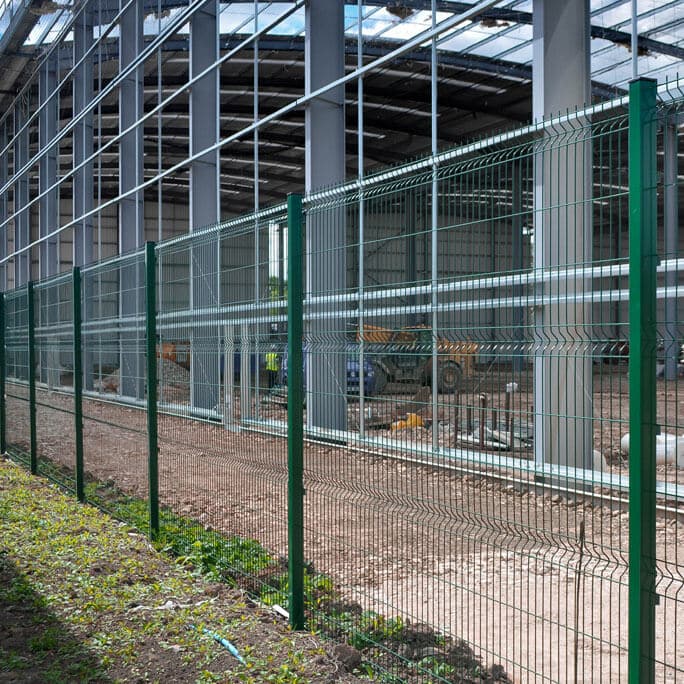
Welded mesh, palisade, steel railings, timber closeboard, acoustic panels, and high security mesh all perform differently. High security welded mesh tends to offer strong anti climb performance and good visibility for CCTV. Palisade can be highly deterrent but may require careful consideration around public areas due to its aggressive appearance and potential safety concerns if poorly specified. Timber can look smart for frontages but may not suit high risk perimeters without enhancements. Coastal environments like Bournemouth can accelerate corrosion, so material choice and protective coatings are essential for longevity and for meeting duty of care expectations.
4. Specify fence height with real context, not rules of thumb
Common heights are useful starting points, but compliance and security require justification. Consider adjacent features that can be used as climbing aids, such as bins, pallets, skip areas, parked vehicles, walls, and storage racks. A lower fence beside a raised bank or building parapet can be effectively much lower. Also consider whether the site borders residential property or a public highway, because higher fencing may need planning consultation. Select a height that supports deterrence and delay, while meeting any local restrictions and maintaining safe sightlines for vehicles leaving the site.
5. Prioritise anti climb and anti cut properties where intrusion would be most damaging
For long lasting security, consider how the fence will be attacked. Anti climb features include narrow apertures, smooth faces, and minimal footholds. Anti cut performance depends on wire gauge, rigidity, and whether cutting would cause enough noise and time to trigger a response. High security mesh can provide excellent delay, especially when combined with secure fixings and robust posts. If you store high value items, tools, copper cable, fuels, or specialist equipment, the fence should slow an attacker long enough for detection and intervention to occur.
6. Use certified systems and documented specifications for easier compliance
When you can, select fencing systems with clear manufacturer data, test information, and warranty terms. Document post sizes, mesh gauge, fixing methods, gate hardware, and finish details. Keeping this information in a site file supports insurance requirements, helps demonstrate due diligence after incidents, and makes future repairs consistent. A documented specification prevents piecemeal changes over years that can quietly reduce security, such as swapping anti tamper fixings for standard bolts during a rushed repair.
7. Design the fence line to remove climbing aids and reduce concealment
Security is not just about the fence itself, it is about the area around it. Maintain a clear strip along the perimeter where practical. Move storage away from the fence, keep bins and pallets inside controlled areas, and avoid dense shrubs that create hiding places. Where vegetation is required for screening, keep it low and set back. This also improves compliance with safety expectations by maintaining visibility of walkways and reducing the risk of hidden hazards along the boundary.
8. Get foundations right for the local ground conditions
Many fencing failures happen below ground. Ground type, drainage, and frost action affect post stability. Clay can heave, sandy soil can shift, and made ground can be inconsistent. Specify foundation depth and concrete size with these conditions in mind. In areas with heavy vehicle vibration, such as near loading bays, posts may need increased embedment or upgraded footings. Strong foundations help gates stay aligned, reduce maintenance, and support long term compliance by preventing leaning panels that create sharp edges or escape routes.
9. Choose corrosion protection that matches exposure levels
Industrial sites often include de icing salts, chemical exposure, coastal air, and constant moisture. Galvanised steel is a baseline, but in harsher locations you may need additional powder coating or specialist marine grade finishes. Check coating thickness, preparation process, and whether cut ends and drilled holes are properly treated. Corrosion is not just cosmetic, it can weaken fixings, cause sharp edges, and lead to panel detachment, all of which become safety and liability issues.
10. Use anti tamper fixings and secure attachment methods throughout
A premium fence can be undermined by basic fixings. Specify shear nuts, security bolts, riveted clamps, or concealed fastening systems where appropriate. Pay special attention at corners, end posts, and around gates where attackers often focus. Use consistent fixings across the site so a maintenance team cannot accidentally replace them with standard hardware. This preserves the intended security rating and helps demonstrate that reasonable measures were in place if your site is targeted.
11. Design corners, ends, and transitions as high risk points
Fence corners and termination points take more stress and provide more leverage for tampering. Use heavier posts, closer post spacing, and reinforced bracing at these locations. Where the fence transitions between systems, such as mesh to railings, ensure there is no gap that creates a crawl through point. Treat these details as core security features, not finishing touches, because many intrusions happen where contractors improvised a connection between two systems.
12. Plan gates as the primary security weakness, then upgrade accordingly
Gates are essential for operations, but they are usually the easiest place to force entry. Match the gate specification to the fence, including frame strength, infill type, hinge security, and locking hardware. Use anti lift hinges, protect the hinge pins, and prevent access to bolts from the public side. Consider double leaf gates with drop bolts and ground sockets, or sliding gates where swing space is limited. A strong fence with a weak gate is a compliance and security problem, because it creates a predictable attack point.
13. Build safe vehicle and pedestrian access into the design
Security should not create unsafe movement patterns. Provide clear separation between pedestrian gates and vehicle gates, set back gates to prevent vehicles queuing onto the highway, and maintain sightlines for drivers. Where possible, add barriers or guardrails to protect gate mechanisms from impacts. Consider how delivery vehicles turn, where trailers swing, and how forklifts move inside the yard. Good access design reduces collisions, prevents fence damage that leads to weak spots, and supports workplace safety expectations.
14. Use controlled access, not just locked access
Locks alone can fail operationally, because keys get shared, lost, or copied. For higher risk sites, use access control such as keypad entry, fobs, or intercom systems. Combine access control with clear procedures for issuing credentials and removing access when staff or contractors leave. This supports compliance by demonstrating control over who can enter restricted areas, and it reduces the need to constantly change padlocks after a key incident.
15. Integrate fencing with CCTV, lighting, and intruder detection
A fence is most effective when paired with detection and response. Ensure fence lines are visible to cameras and not obstructed by glare or shadows from lighting. Position lighting to reduce dark zones near gates, corners, and recesses, while avoiding light spill that could create nuisance issues. Consider fence mounted detection where appropriate, but ensure equipment is robust and installed in a way that does not create climb assists or snag hazards. Integration improves the chance of early detection, which is critical for long lasting security outcomes.
16. Maintain compliant clearances around services and utilities
Industrial perimeters often cross areas with buried cables, drainage runs, water mains, and telecoms. Before digging posts, confirm service locations and use safe excavation practices. Keep appropriate clearances and install marker tape where needed. Also consider access panels, meter boxes, and fire hydrants, ensuring the fence does not obstruct required approach routes. Avoiding service strikes protects safety, prevents expensive downtime, and demonstrates responsible installation methods.
17. Consider fire safety and emergency egress from the start
Fencing can inadvertently restrict escape routes or emergency service access. Ensure emergency exits are not blocked, that panic hardware is appropriate where required, and that locked gates do not trap people on site. For some facilities, you may need break glass points, monitored locks, or fail safe systems aligned with fire risk assessments. Include signage for emergency routes and maintain gate access for fire appliances where necessary. A secure perimeter is not compliant if it compromises safe evacuation or emergency response time.
18. Manage public interface areas with safer, smarter fence detailing
When the boundary faces public footpaths, schools, parks, or residential roads, design should balance deterrence, appearance, and safety. Use smooth top rails or closed profiles where appropriate, avoid protrusions that could snag clothing, and ensure any security topping is lawful and justified. Keep gaps under the fence small enough to discourage access but large enough to avoid trapping hazards. In public facing locations, neat alignment, consistent heights, and high quality finishes also reduce complaints and planning risk.
19. Install with strict line, level, and tension controls
Even robust materials perform poorly if installed badly. Set out accurately, keep posts plumb, and maintain consistent panel spacing. Incorrect alignment can create weak points at fixings, cause panels to rattle in wind, and lead to early coating wear where steel rubs. For chain link or tensioned systems, correct tensioning prevents sagging that invites climbing and reduces durability. Good installation quality is one of the strongest predictors of long term performance and reduced lifecycle cost.
20. Avoid creating gaps at the bottom, top, and around structures
Attackers look for gaps, and so do animals. Maintain a consistent ground clearance appropriate to the terrain, and address changes in level with stepped panels or raked sections. Around walls, columns, and existing buildings, close off voids using properly fixed infill panels rather than improvised sheets or timber. Pay particular attention under gates, where ground erosion can create a crawl space. Closing gaps improves security and supports compliance by reducing trip hazards and preventing unauthorised access.
21. Protect the fence from vehicle impact in high traffic zones
Yards with HGVs, forklifts, and contractors are tough on perimeters. Install bollards, wheel stops, or internal barriers near corners, gate posts, and tight turning points. Consider sacrificial impact protection that can be replaced after a collision without rebuilding the fence line. Vehicle impacts often cause subtle post movement that later becomes a security weakness, including gates not closing properly or panels becoming loose. Preventive protection is usually cheaper than reactive repairs and reduces operational disruption.
22. Use signage to support security, safety, and legal defensibility
Signs are not just for deterrence, they create clarity. Use consistent signs for private property, no unauthorised access, CCTV in operation, and specific hazards such as high voltage or moving vehicles. Place signs at entrances and regular intervals, keeping them readable and maintained. Appropriate signage supports compliance by informing visitors and employees of rules and risks, and it also helps reduce ambiguity after incidents, because it demonstrates that people were warned of restricted areas.
23. Establish a routine inspection and maintenance schedule
Long lasting fencing relies on small problems being fixed before they become major failures. Create a schedule for monthly visual checks and more detailed quarterly or biannual inspections depending on site risk and exposure. Look for loose fixings, coating damage, corrosion spots, ground washout, leaning posts, and gate misalignment. Record findings, actions taken, and dates. A maintenance log supports compliance and can be valuable for insurance, audits, and contractor management.
24. Repair damage with like for like components and proper surface preparation
Emergency repairs often become permanent, which is why repair standards matter. Use matching panels, posts, and security fixings. Treat any exposed metal promptly with appropriate primers and topcoats, and ensure galvanised surfaces are prepared correctly so paint adheres. Replace bent components rather than trying to straighten critical security parts that may have cracked coatings. Consistent repairs preserve the fence performance, reduce corrosion spread, and avoid creating weak sections that invite repeat attacks.
25. Plan for lifecycle upgrades and future compliance changes
Industrial and commercial sites evolve. Operations change, yard layouts shift, and compliance expectations may increase. Build flexibility into your fencing plan by allowing for future gate automation, additional access points, and integration with new security systems. Keep spare panels and fixings for fast repairs, and maintain as built drawings or layouts that show post spacing, gate dimensions, and service routes. A fence that can be adapted without constant patchwork will remain secure and compliant for longer, reducing total cost of ownership and avoiding rushed changes that introduce safety or legal risks.
Industrial and commercial fencing checklist for durability and compliance
Documented specification: Keep records of fence type, height, post size, coating, fixings, and gate hardware.
Ground and drainage: Confirm soil conditions, prevent pooling water at posts, and address erosion under gates.
Corrosion control: Use suitable galvanising and coatings for coastal or chemical exposure locations.
Gate security: Match gate strength to the fence, use anti lift hinges, and choose robust locks.
Safety and access: Separate pedestrian and vehicle flows, ensure emergency egress is protected and functional.
Inspection logs: Schedule checks, record defects, and close out repairs with photos when possible.
Operational habits that keep fencing effective year after year
Keep the perimeter clear: Move climb aids like pallets, containers, and bins away from the boundary.
Control contractors: Brief visiting drivers and subcontractors on gate procedures, and do not prop gates open.
Manage vegetation: Cut back hedges and vines that hide tampering or add weight to panels.
Close and lock consistently: Ensure the last person out is responsible for locking and checking all access points.
Report defects quickly: Treat a loose panel or a dragging gate as an urgent security issue, not a minor snag.
Common failure points to watch for during inspections
Gate drop and hinge wear: Often caused by weak foundations, impacts, or poor alignment.
Loose security fixings: Vibration, repeated impacts, or improper installation torque can loosen clamps.
Corrosion at cut edges: Especially where on site modifications were not re treated properly.
Washout and voids under fence lines: Creates crawl through gaps and undermines post stability.
Panel deformation: Can indicate climbing attempts, vehicle contact, or wind load stress.
Summary focus for Boundary Fencing Bournemouth style industrial and commercial outcomes
Security: Aim for deterrence, delay, and detection by matching fence and gate performance to real risks.
Compliance: Protect emergency access and egress, use safe detailing near the public, and keep clear documentation.
Longevity: Invest in foundations, corrosion protection, correct installation, and a routine maintenance plan.
Consistency: Use like for like components and anti tamper fixings, avoiding quick fixes that weaken the system.